|
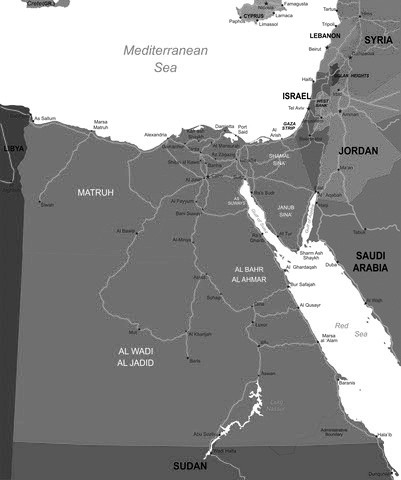
Note on Psalm 83 It is not unusual for a Psalm to be prophetic, but generally we expect prophecy in writings such as Ezekiel and Daniel or the shorter books like Joel or Obadiah. What is first striking is that Israel’s enemies aim to "cut them off from being a nation" that "the name of Israel may be no more in remembrance." (v.4) Over 100 years ago that land was known as Palestine and the League of Nations had a Palestinian mandate which was controlled by Britain after World War One, when France also controlled territory in the Near East too. In 1947 British rule fell away and on 29 November 1947 there was a United Nations resolution for a Jewish state. Israel became a nation on 14 May 1948. Psalm 83 lists the people, places and areas that wish to remove Israel as a nation. They are Edom, the Ishmaelites, Moab, the Hagarenes, Gebal, Ammon, Amalek, the Philistines and Tyre. Gebal and Tyre were coastal cities now in Lebanon. Edom, Moab and Ammon are now in areas known as Jordan but formerly known as Transjordan. The Philistines had their towns in and around Gaza. Asshur is on the banks of the river Tigris in modern day Iraq. The Hagarenes are less easy to identify. Genesis 25:12 describes Hagar as "the Egyptian" and therefore could indicate Egypt as one of Israel’s enemies. The Ishmaelites were the descendants of Abraham and Hagar and also could indicate a connection with Egypt. However Gen.25:18 describes their descendants of Israel as living "from Havilah unto Shur, that is before Egypt, as thou goest toward Assyria." Shur was a wilderness between Gaza and the Red Sea which is now a part of Egypt. Havilah is an area on the west side of the Persian Gulf now, where some of the smaller gulf states like Dubai are. Assyria, whose capital was Nineveh but is now the Iraqi city of Mosul, extended North and West from that great city covering areas into Syria. Hence it is not surprising to find Israel’s first battle from 15 May 1948 to 20 July 1949 was from Egypt, Iraq, Jordan, Lebanon and Syria. The third feature of this Psalm is the description of former battles where God fought for Israel and won. The first one is in verse 9 when Deborah was judge of Israel and King Jabin’s army led by Sisera was defeated in Judges 4 and 5. There was an overwhelming amount of water which defeated the enemy troops and their chariots and the fleeing Sisera was killed by a woman while seeking shelter. The second one concerns the time when Gideon was judge in Judges 7 and 8. After the miraculous way the Midianites fled the battle, the men of Ephraim pursued and killed the two princes of Midian Oreb and Zeeb and then Gideon pursued two kings of Midian Zebah and Zalmunna and killed them. (Judg.8:12,21) The picture is of an overwhelming defeat. Such were the defeats of the nations of Egypt, Iraq, Jordan, Lebanon and Syria. Firstly when they tried to prevent a Jewish state and the partition of Palestine as proposed by the United Nations and Israel ended up with more land than allocated. There was an armistice in July1949. Also the 6‑day war in 1967. This time it was Egypt, Jordan and Syria when Egyptian lined troops on the border and closed the Gulf of Aqaba with Jordan having entered a defence pact with Egypt. There was a further war in 1973. The battle described in Ezekiel 38 and 39 seems to have other enemies. The purpose of this Psalm 83 reveals that the world will appreciate that God, Yahweh, is the one and only God.
Map of the Middle East and nations |